

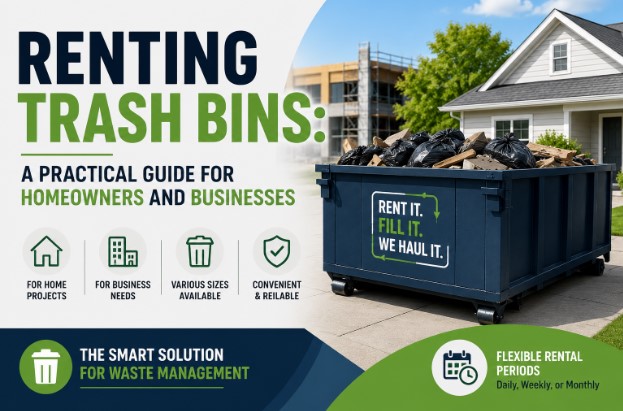
Whether you’re completing a home renovation, cleaning out a property, or managing a commercial construction project, renting trash bins can make waste removal significantly easier. Instead of making repeated trips to a landfill or transfer station, a rented bin provides a convenient location to collect debris throughout your project.
Choosing the right container, understanding what materials are accepted, and planning delivery and pickup can help keep your project organized and avoid unexpected disposal issues.
What Does Renting a Trash Bin Involve?
Trash bin rental typically involves having a waste container delivered to your property for a predetermined rental period. You fill the container during your project, and the rental company collects it when you’re finished.
Depending on the provider, rental services may include:
- Bin delivery
- Flexible rental periods
- Scheduled pickup
- Multiple container sizes
- Waste transportation
- Disposal or recycling services
This approach can be particularly useful when a project generates more waste than regular curbside collection can handle.
When Should You Rent a Trash Bin?
A rented bin can be useful for many projects, including:
- Home renovations
- Garage cleanouts
- Basement cleanouts
- Estate cleanups
- Roofing projects
- Landscaping
- Office renovations
- Construction and demolition
- Furniture removal
For everyday household garbage, municipal collection may be sufficient. Larger projects generally require a dedicated waste container.
Choosing the Right Bin Size
Trash bins come in different capacities. The appropriate size depends on the volume and type of material you expect to generate.
4-Yard Bins
Suitable for smaller cleanups and commercial waste collection.
10-Yard Bins
Often appropriate for small renovations, garage cleanouts, landscaping debris, and household junk.
20-Yard Bins
Useful for medium-sized renovations, construction projects, and larger property cleanouts.
30- to 40-Yard Bins
Designed for major renovations, commercial projects, demolition, and large volumes of construction debris.
When you’re uncertain, discuss your project with the rental provider rather than guessing based solely on the physical size of the pile.
What Can Go in a Trash Bin?
Accepted materials vary by provider, but common non-hazardous waste may include:
- Household junk
- Furniture
- Cardboard
- Wood
- Drywall
- Flooring
- Roofing materials
- Yard debris
- General construction waste
Some materials typically require specialized disposal.
These may include:
- Paint and solvents
- Hazardous chemicals
- Batteries
- Propane cylinders
- Tires
- Medical waste
- Asbestos-containing materials
Always confirm the provider’s prohibited-material list before loading the bin.
Benefits of Renting Trash Bins
Convenience
A container gives you one central location for collecting project waste.
Time Savings
You don’t have to repeatedly transport debris to a disposal facility.
Improved Job-Site Organization
Keeping waste inside a designated bin can make the work area cleaner and easier to navigate.
Flexible Capacity
Different bin sizes allow you to select a container appropriate for the scale of your project.
Professional Waste Handling
A reputable provider can transport collected materials to appropriate disposal or recycling facilities.
Tips for a Successful Rental
Before the bin arrives, consider:
- Where it will be placed
- How much waste the project may generate
- Whether the delivery vehicle has sufficient access
- Which materials are prohibited
- How long you’ll need the container
During loading:
- Break down bulky items when possible.
- Distribute heavy materials evenly.
- Keep debris below the container’s fill line.
- Avoid placing prohibited materials inside.
Planning ahead can make the entire disposal process smoother.
How Much Does Trash Bin Rental Cost?
The cost of renting a trash bin varies based on factors such as:
- Bin size
- Rental duration
- Location
- Waste type
- Weight
- Delivery distance
- Disposal fees
Some providers offer straightforward pricing, while others may charge additional fees for excess weight, prohibited materials, extended rental periods, or additional pickups.
Ask for a complete quote and clarify what is included before confirming your rental.
Frequently Asked Questions
How long can I rent a trash bin?
Rental periods vary by provider. Some offer short-term rentals for a few days, while others provide longer arrangements for extended projects.
What size trash bin should I rent?
The correct size depends on your project’s waste volume and the type of materials involved. A rental provider can help estimate the appropriate capacity.
Can construction debris go into a trash bin?
Many providers accept common construction debris such as wood, drywall, flooring, and roofing materials. Hazardous and regulated materials generally require separate disposal.
Can I put the bin on my driveway?
Many residential projects use driveways for bin placement, but adequate space and access are required. Local rules or permits may also apply depending on the location.
Conclusion
Renting trash bins is a convenient way to manage waste from renovations, cleanouts, landscaping, construction, and commercial projects. Selecting the right size, understanding accepted materials, planning the placement area, and clarifying rental costs can help prevent delays and unnecessary expenses.
For larger projects in Kelowna and surrounding areas, a local dumpster rental provider can help determine the appropriate container and arrange delivery and pickup according to your project schedule.