

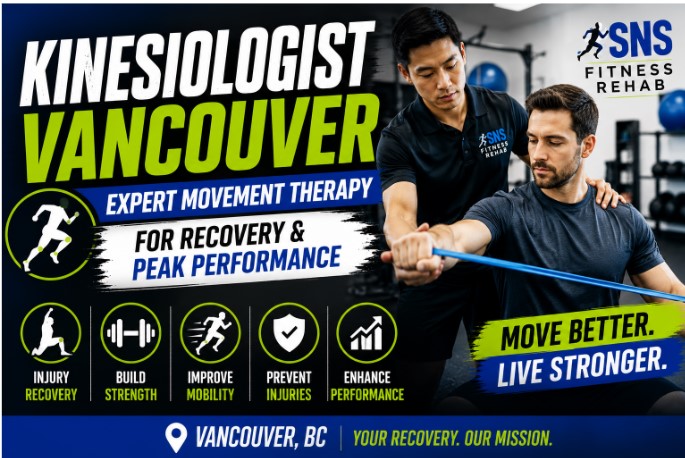
Whether you’re recovering from an injury, managing chronic pain, or working toward better physical performance, consulting a kinesiologist in Vancouver can be an effective step toward achieving your health goals. Kinesiologists specialize in human movement and use evidence-based exercise programs to help individuals improve mobility, restore function, and prevent future injuries.
From office workers experiencing posture-related discomfort to athletes returning to competition, kinesiology offers personalized solutions that focus on long-term health and functional movement.
What Does a Kinesiologist Do?
A kinesiologist is a healthcare professional trained in the science of human movement. Their role is to assess how your body moves, identify limitations, and create customized exercise programs that support recovery, improve physical function, and reduce the risk of injury.
Treatment plans are tailored to each individual and may focus on:
- Injury rehabilitation
- Chronic pain management
- Postural correction
- Strength and conditioning
- Balance and coordination
- Flexibility and mobility
- Workplace injury recovery
- Functional movement training
By addressing the root cause of movement dysfunction, a kinesiologist helps improve overall physical performance and quality of life.
Conditions a Kinesiologist Can Help Manage
Many people seek kinesiology services for a variety of musculoskeletal conditions, including:
- Back and neck pain
- Shoulder injuries
- Knee pain
- Hip discomfort
- Sports injuries
- Tendon and ligament injuries
- Arthritis-related mobility issues
- Repetitive strain injuries
- Post-surgical rehabilitation
Kinesiologists often work alongside physiotherapists, chiropractors, massage therapists, and other healthcare professionals to support comprehensive rehabilitation.
The Benefits of Seeing a Kinesiologist
Personalized Exercise Programs
Every treatment plan is designed around your specific goals, fitness level, and physical condition. Exercises are progressively adjusted as your strength and mobility improve.
Injury Prevention
Movement assessments can identify muscle imbalances, poor movement patterns, and weaknesses that may increase the risk of future injuries.
Improved Mobility and Flexibility
Targeted exercises help restore joint mobility and improve overall flexibility, making daily activities more comfortable and efficient.
Better Strength and Function
Kinesiologists focus on strengthening muscles that support proper posture, balance, and movement mechanics, helping you perform everyday tasks with greater ease.
Support for Active Lifestyles
Whether you’re a recreational runner, competitive athlete, or simply enjoy staying active, kinesiology programs can enhance performance while reducing injury risk.
What to Expect During Your First Appointment
Your initial visit typically begins with a comprehensive assessment that may include:
- Health and injury history
- Postural evaluation
- Functional movement assessment
- Strength and flexibility testing
- Balance and mobility evaluation
- Goal setting
Based on the assessment, your kinesiologist will create a customized exercise program designed to support your recovery and long-term health.
Who Can Benefit from Kinesiology?
Kinesiology is appropriate for people of all ages and activity levels, including:
- Athletes recovering from sports injuries
- Office workers with posture-related discomfort
- Seniors looking to improve balance and mobility
- Individuals recovering from surgery
- People managing chronic pain
- Workers returning after workplace injuries
- Anyone seeking to improve overall physical function
Programs are adapted to each individual’s abilities and rehabilitation goals.
Tips for Maximizing Your Results
To achieve the best outcomes from kinesiology treatment:
- Attend appointments consistently.
- Complete your prescribed home exercise program.
- Communicate any changes in symptoms with your practitioner.
- Stay active within your recommended limits.
- Maintain healthy lifestyle habits, including adequate sleep and hydration.
Consistency plays an important role in achieving lasting improvements.
Frequently Asked Questions
What’s the difference between a kinesiologist and a physiotherapist?
Both professionals help improve movement and function. Physiotherapists often diagnose and treat acute injuries using a broader range of therapeutic techniques, while kinesiologists primarily focus on exercise therapy, movement analysis, and long-term functional rehabilitation.
Do I need an injury to see a kinesiologist?
No. Many people work with kinesiologists to improve posture, enhance athletic performance, increase strength, prevent injuries, or maintain long-term mobility.
How many sessions will I need?
The number of sessions depends on your condition, goals, and progress. Your kinesiologist will regularly reassess your program and adjust it as you improve.
Can kinesiology help with chronic pain?
Yes. Exercise therapy and movement education are commonly used to help improve function and reduce discomfort associated with many chronic musculoskeletal conditions. Individual results vary depending on the underlying condition and adherence to the treatment plan.
Conclusion
Working with a kinesiologist in Vancouver can help you move better, recover more effectively, and build the strength and confidence needed for long-term health. Whether you’re recovering from an injury, managing chronic pain, or looking to improve athletic performance, personalized movement-based rehabilitation offers a proactive approach to restoring function and supporting an active lifestyle.